Articles
Scholarly Articles
Long-form biblical and theological studies for pastors, students, and serious readers.
Religions & Cults
What Is Hinduism? A Scholarly Introduction to Its Origins, Scriptures, Worldview, and Religious Life

What Is Hinduism? A Scholarly Introduction to Its Origins, Scriptures, Worldview, and Religious Life
Hinduism is not one uniform creed but a diverse family of religious traditions. This scholarly guide explains its history, scriptures, worldview, worship, major schools, and how its claims compare with biblical Christianity.
Religions & Cults
The Language of World Religions: An Academic Glossary of Key Concepts in Religious Studies and Philosophy of Religion
The Language of World Religions: An Academic Glossary of Key Concepts in Religious Studies and Philosophy of Religion
Learn the academic language of world religions through a verified glossary of key concepts used in Religious Studies, philosophy of religion, anthropology, and theology of religions.
Religions & Cults
Neither Identity nor Infinite Distance: God, the Human Self, and Union with Christ in Christian Theology and the Three Major Schools of Vedānta
Neither Identity nor Infinite Distance: God, the Human Self, and Union with Christ in Christian Theology and the Three Major Schools of Vedānta
Christian salvation is neither the realization that the self has always been Brahman nor the absorption of the creature into divine substance. Comparing Advaita, Viśiṣṭādvaita, and Dvaita with classical Christian theology, this article argues for communion without ontological confusion.
Religions & Cults
Why Should Christians Study World Religions? A Biblical, Missional, and Apologetic Guide
Why Should Christians Study World Religions? A Biblical, Missional, and Apologetic Guide
Christians study world religions neither to compromise the gospel nor to mock their neighbors, but to understand people truthfully, evaluate religious claims biblically, and bear witness to Jesus Christ with clarity, humility, and love.
 Article
Abraham in the Bible and Beyond: History, Tradition, Family, and Faith
A scholarly study of Abraham through the biblical narrative, historical debate, literary structure, family conflict, covenant theology, and later Jewish, Christian, and Islamic interpretation.
 Article
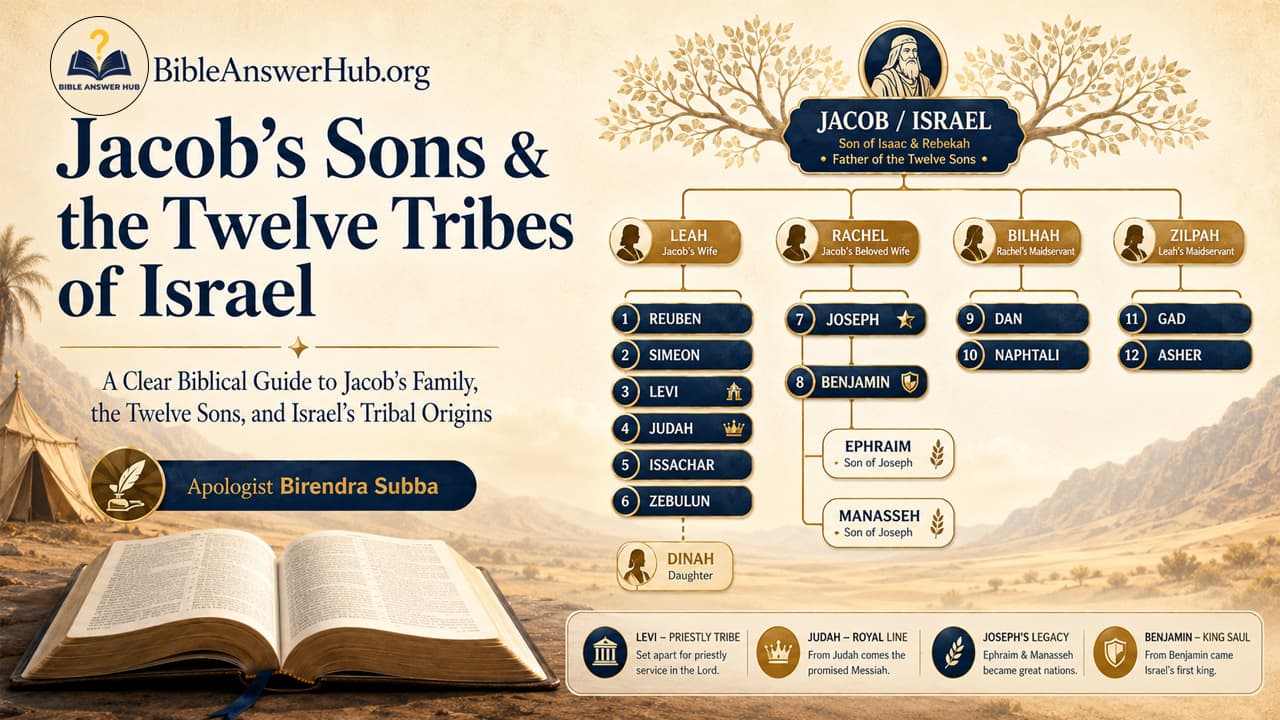
Jacob's Sons and the Twelve Tribes of Israel: Full Explanation
A chart-based guide to Jacob's twelve sons in Genesis — how the tribes of Israel were formed through Leah, Rachel, Bilhah, and Zilpah, and why Levi, Judah, Joseph, and Benjamin hold special roles in biblical history.
 Article
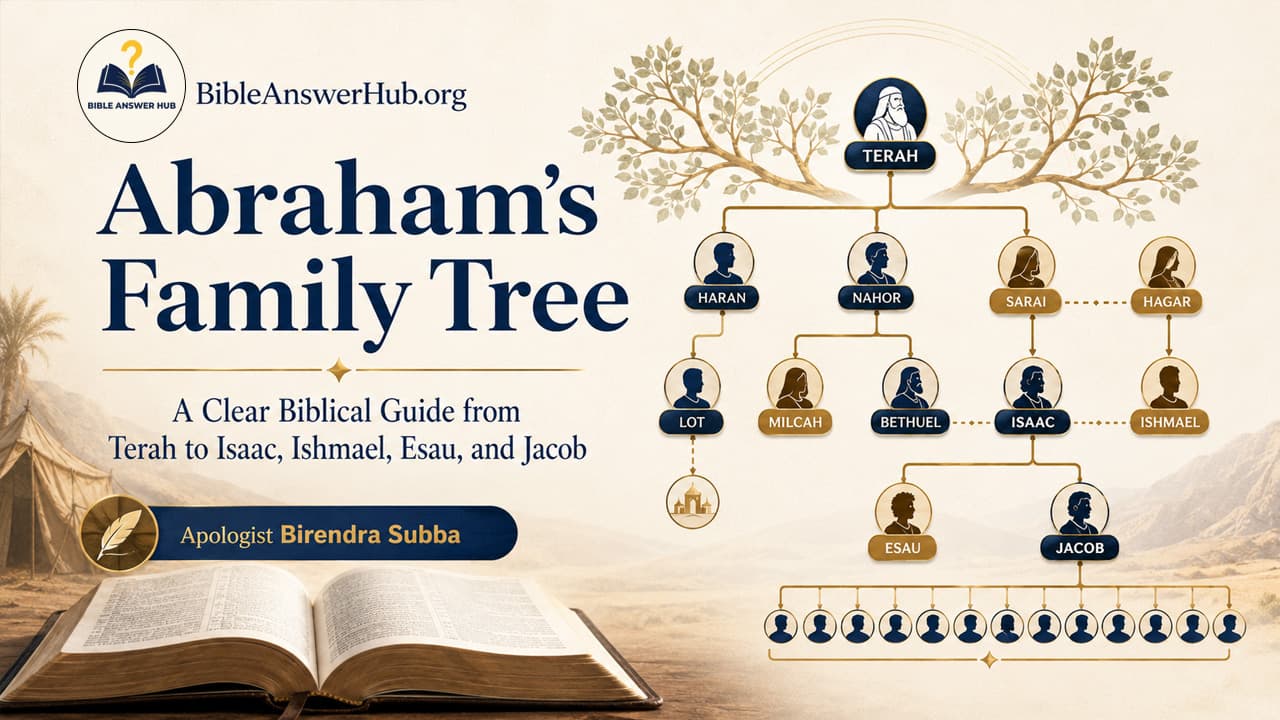
Abraham's Family Tree: Full Explanation
A visual guide to Abraham's family line in Genesis — from Terah to Isaac, Ishmael, Jacob, Esau, and the peoples connected to Abraham's wider household, including the covenant line that leads to Israel.
 Article
Who Was Abraham in the Bible? Faith, Covenant, and God's Promise to the Nations
Abraham is one of the most important figures in the Bible — the father of the covenant, a model of faith, and the beginning of God's promise to bless all nations. This article explores his calling, family, character, and lasting significance.